A well-built sauna is a piece of equipment that should easily outlast the person who installed it. The single biggest factor in whether yours does — more than the wood species, more than the heater, more than anything in the catalogue — is whether you spend five minutes after every session opening the door.
Most maintenance writing makes sauna care sound complicated. It really isn’t. There is one habit that protects your sauna for decades, three or four small seasonal tasks, and a small list of things never to do. Get the habit right and the rest follows.
The five-minute habit that does most of the work
After every sauna session, do this:
- Open the door fully and the vents wide.
- Wipe up any pooled water or sweat from the benches and floor with a clean cloth.
- Leave the door slightly ajar for at least one to two hours so the cabin dries completely.
- Switch off the electric heater (or close the wood-stove damper only once the ashes are cool).
That’s it. Wood that dries quickly between sessions stays beautiful, light in colour, and resistant to mould. Wood that stays damp darkens unevenly, develops odour, and ages prematurely. The wood doesn’t fail because of heat or humidity in use — it fails because it never gets a chance to dry afterwards.
“The wood doesn’t mind heat. It doesn’t mind humidity. What it minds is staying damp. Five minutes of airing protects everything else you ever do.”
Weekly cleaning
If you sauna once a week or more, give the cabin a light clean once a week. With the sauna fully cool:
- Sweep or vacuum loose debris from the floor and bench slats.
- Wipe the benches and headrests with a damp (not wet) cloth and warm water. Plain water is enough.
- For visible stains or sweat marks, use a soft brush with warm water and a small amount of mild, neutral, fragrance-free soap. Rinse with a clean damp cloth.
- Clean the inside of the glass door with warm water and a microfibre cloth. For mineral haze, a small amount of white vinegar in water works well.
- Lift any duckboards or floor grids, sweep underneath, and let everything dry before replacing.
Quarterly tasks
Every three to four months, an hour’s attention with the sauna fully cool:
- Inspect the wood for cracks, loose boards, or splinters. Light surface checking is normal as wood expands and contracts; loose fixings should be tightened.
- Sand any rough spots on benches, headrests, or backrests lightly with fine-grit (180–240) sandpaper, in the direction of the grain.
- Vacuum the air intake and exhaust vents — keeping these clear keeps the airflow system working as designed.
- Tighten door hinges and the handle if they’ve loosened.
- Inspect the area around the heater for any signs of scorching or melted material. If you see any, stop using the heater and contact us.
- Check the exterior for damaged seals, missing fasteners, or signs of water ingress around the roof, door or chimney penetration.
The annual deep service
Once a year — a quiet weekend in spring or autumn is ideal — give the sauna a proper service.
Inside the cabin
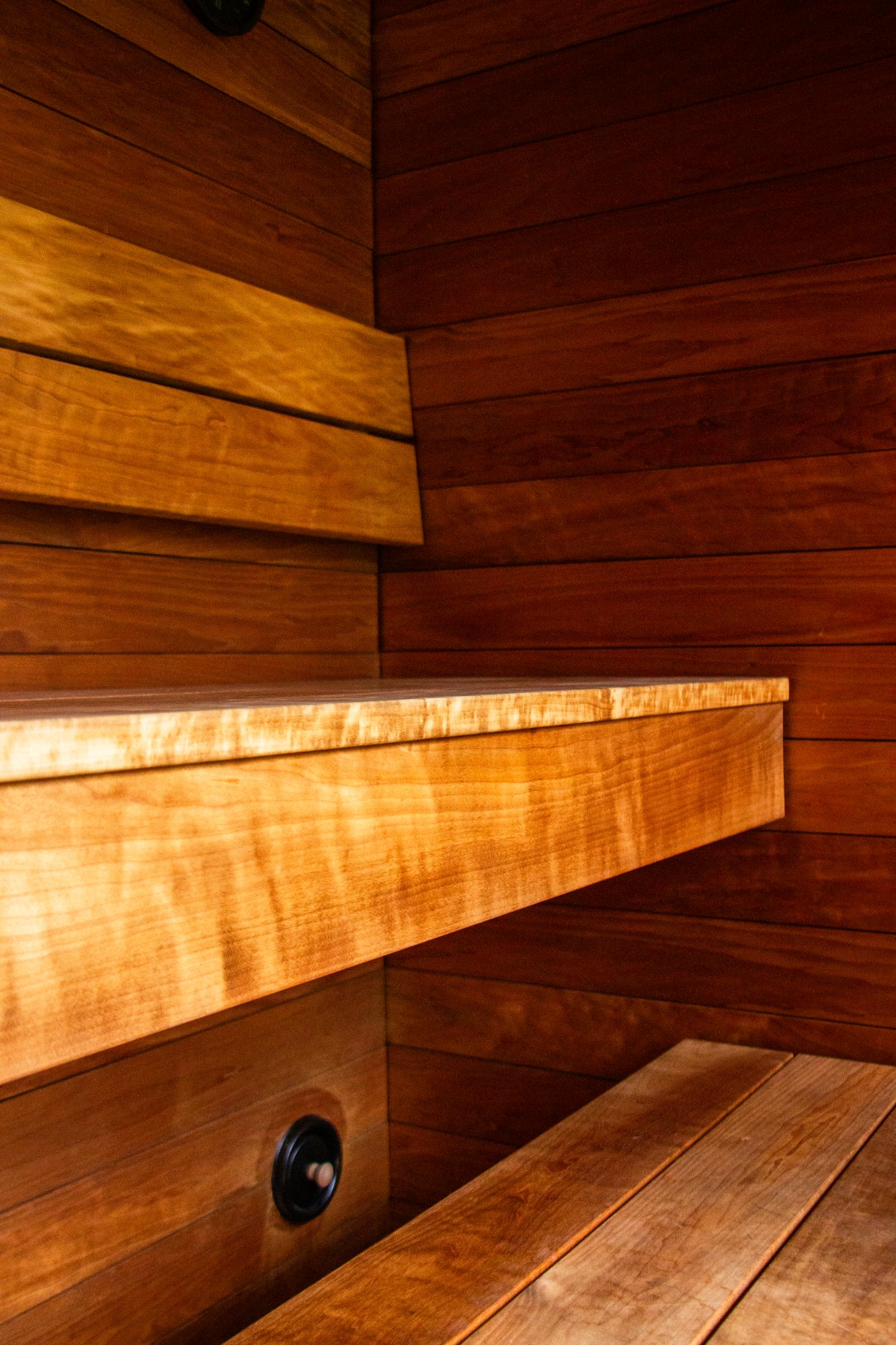
Remove duckboards, loose benches, and headrests. Sand bench surfaces with 180-grit, then 240-grit sandpaper. Wipe down with a barely damp cloth and let dry fully. Inspect the underside of benches and the lower wall sections — these are where moisture lingers longest.
The stones
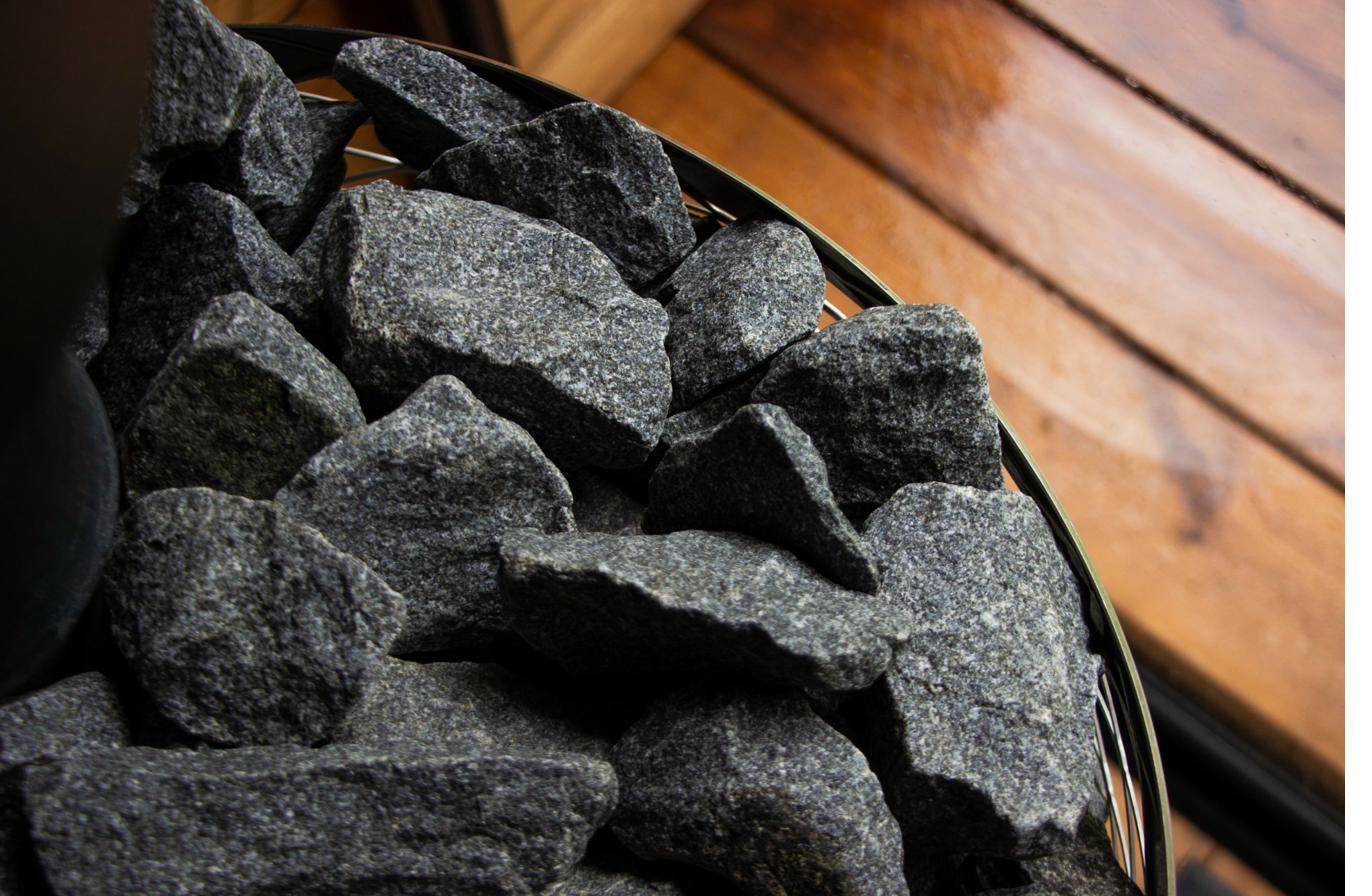
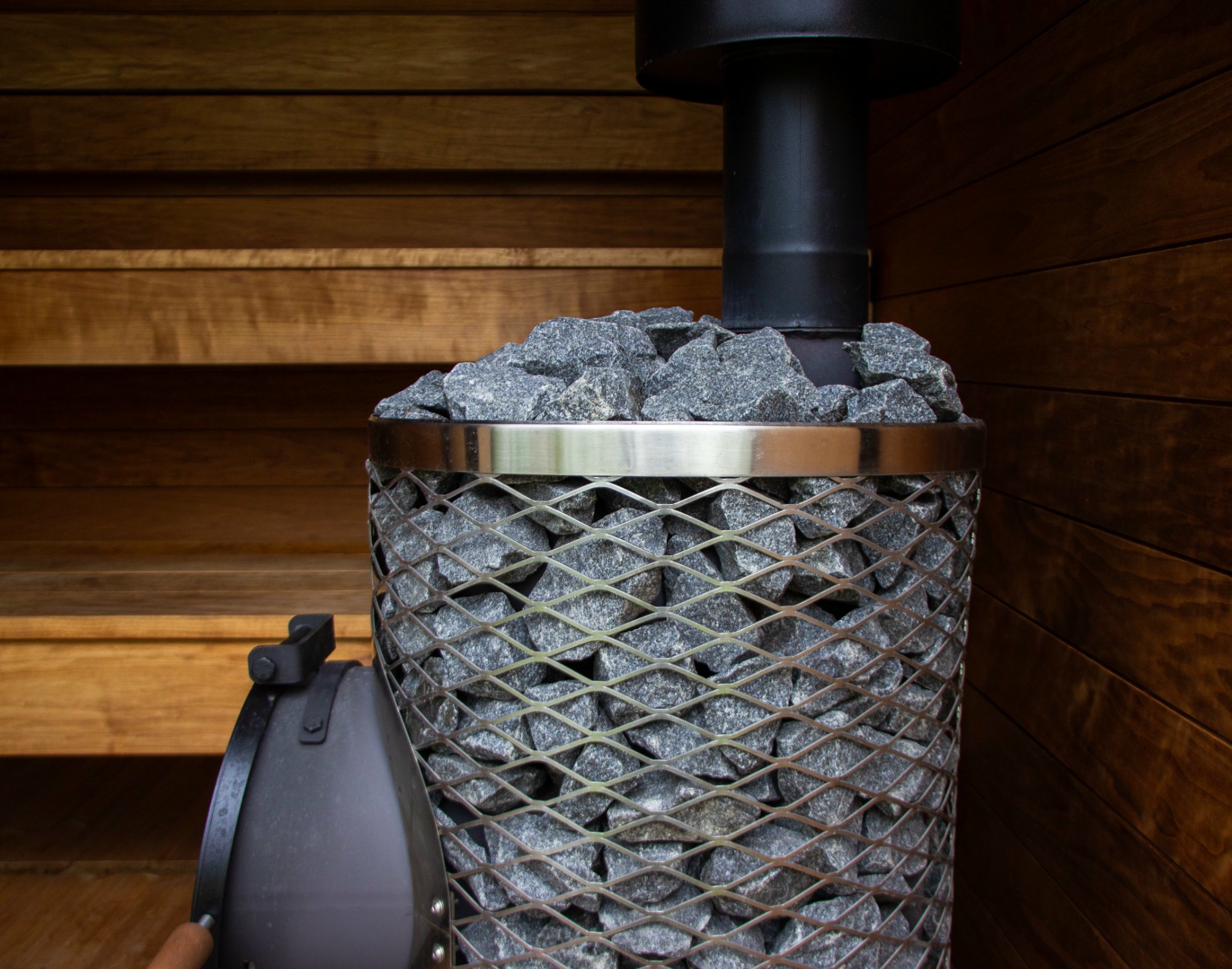
Both Harvia and IKI publish the same advice: rearrange your sauna stones at least once a year, more often with frequent use. Lift each stone out (with the heater fully cold and powered off), discard any that are cracked or noticeably reduced in size, sweep out fragments and dust from the base, then repile loosely with small gaps for airflow. Top up with new stones of the same type as needed. We covered this in detail in our complete sauna stones guide — the annual check is the single most important maintenance task.
The exterior
Inspect the exterior cladding and finish, particularly on the south- and west-facing sides which receive the most sun. For most installations in Belgium and the Netherlands, plan to recoat the exterior every two to four years with a suitable exterior wood treatment. Always contact us before recoating — we will confirm the exact finish your sauna left the factory with and recommend a compatible product. Using an incompatible coating can cause peeling and long-term damage that is not covered by warranty.
The wood-burning chimney (if applicable)
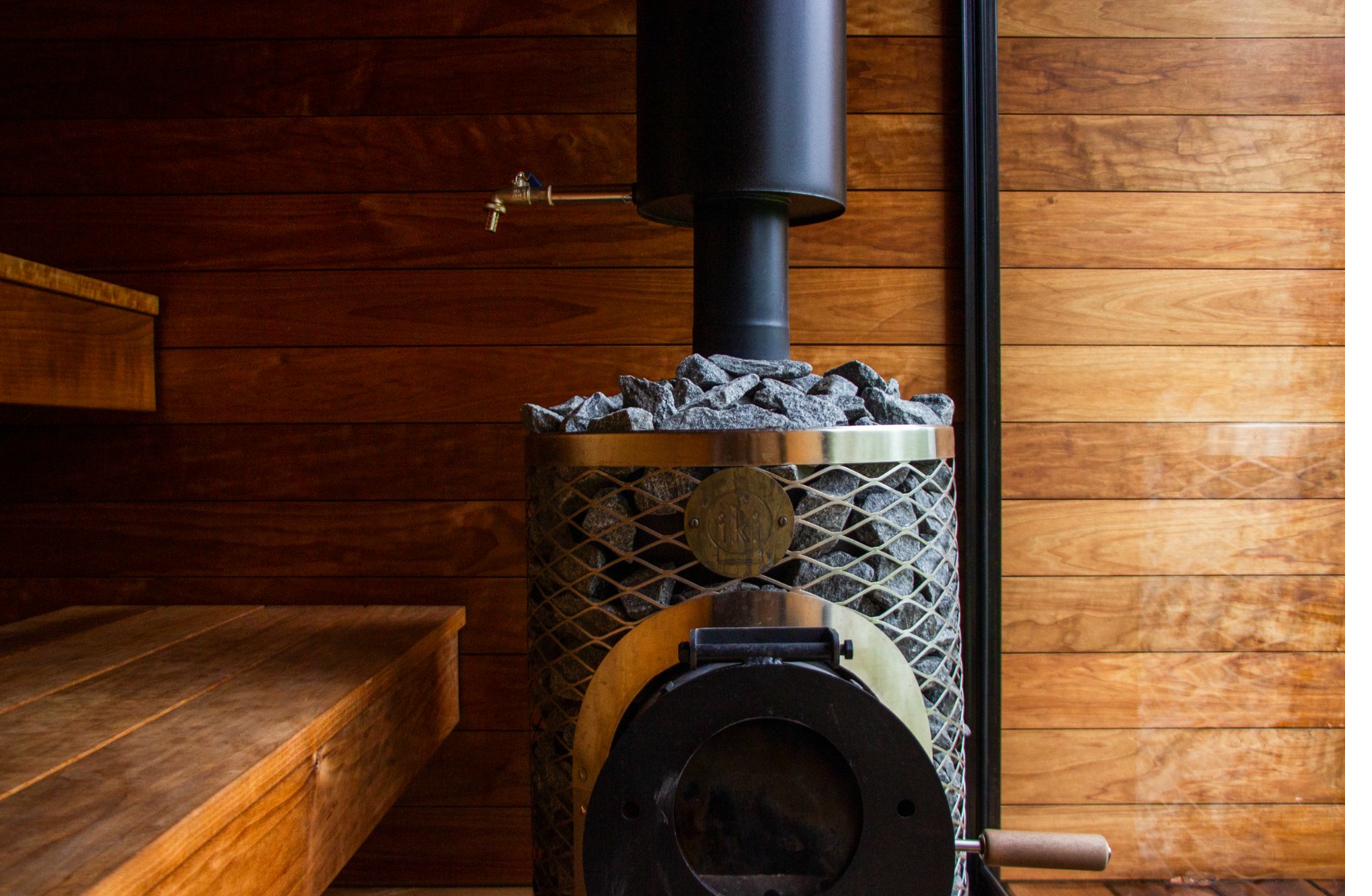
For sauna owners with the Mini IKI wood stove: chimney sweeping is a safety-critical task and must follow IKI’s guidance and your local fire-rescue regulations. IKI recommends sweeping every three years for occasional holiday use, or annually for regular use. In Belgium, sweeping by a registered specialist is a regional requirement and is normally a condition of household insurance. Use a flexible nylon brush only — never a metal one, which damages the inside of the pipe.
Through the seasons
Spring
The natural moment for the annual deep service. The sauna has been through winter; the exterior has weathered the worst rain and frost. Inspect everything thoroughly, rearrange the stones, and treat the exterior if needed.
Summer
Use as normal, with extra attention to ventilation — long warm afternoons mean the cabin heats up even when not in use. Make sure rain drains well from the roof and around the base.
Autumn
Clear leaves from the roof and from around the chimney penetration if you have a wood stove. Inspect the seals around the door before the wet weather arrives.
Winter
The classic Finnish sauna season. After-session airing is doubly important — winter air doesn’t move through the cabin as efficiently as summer air. Leave the door fully open for the recommended hour or two even if it’s cold outside; the heat loss is minimal and the drying benefit is significant.
The list of things never to do
Avoiding these will keep your sauna in beautiful condition for a very long time:
- Never seal, varnish, oil, or wax the interior wood.
- Never use a pressure washer on the sauna, inside or out.
- Never use bleach, ammonia, or strongly scented household cleaners inside the cabin.
- Never pour sea water or salty water on the stones — this voids the heater warranty.
- Never use river stones, decorative stones, or anything not sold as a sauna stone.
- Never hang clothing or towels on the heater, or use the sauna to dry laundry.
- Never operate the sauna with the heater obstructed or with stones missing.
- Never carry out electrical service on the Harvia heater yourself — only a qualified electrician.
- Never burn rubbish, painted wood, treated timber, or excessive cardboard in the IKI wood stove.
- Never close the chimney damper while embers are still hot.
The full owner’s care guide
Everything in this article — and quite a bit more, including a printable seasonal checklist, troubleshooting common issues, and the full IKI and Harvia maintenance procedures — is collected in our complete Owner’s Care Guide. We send a copy to every iHKA owner, and we’re happy to send one to anyone considering a sauna who wants to understand the long-term commitment first. It’s one of the best decisions you’ll make about your sauna, and it’s nothing to be intimidated by.